



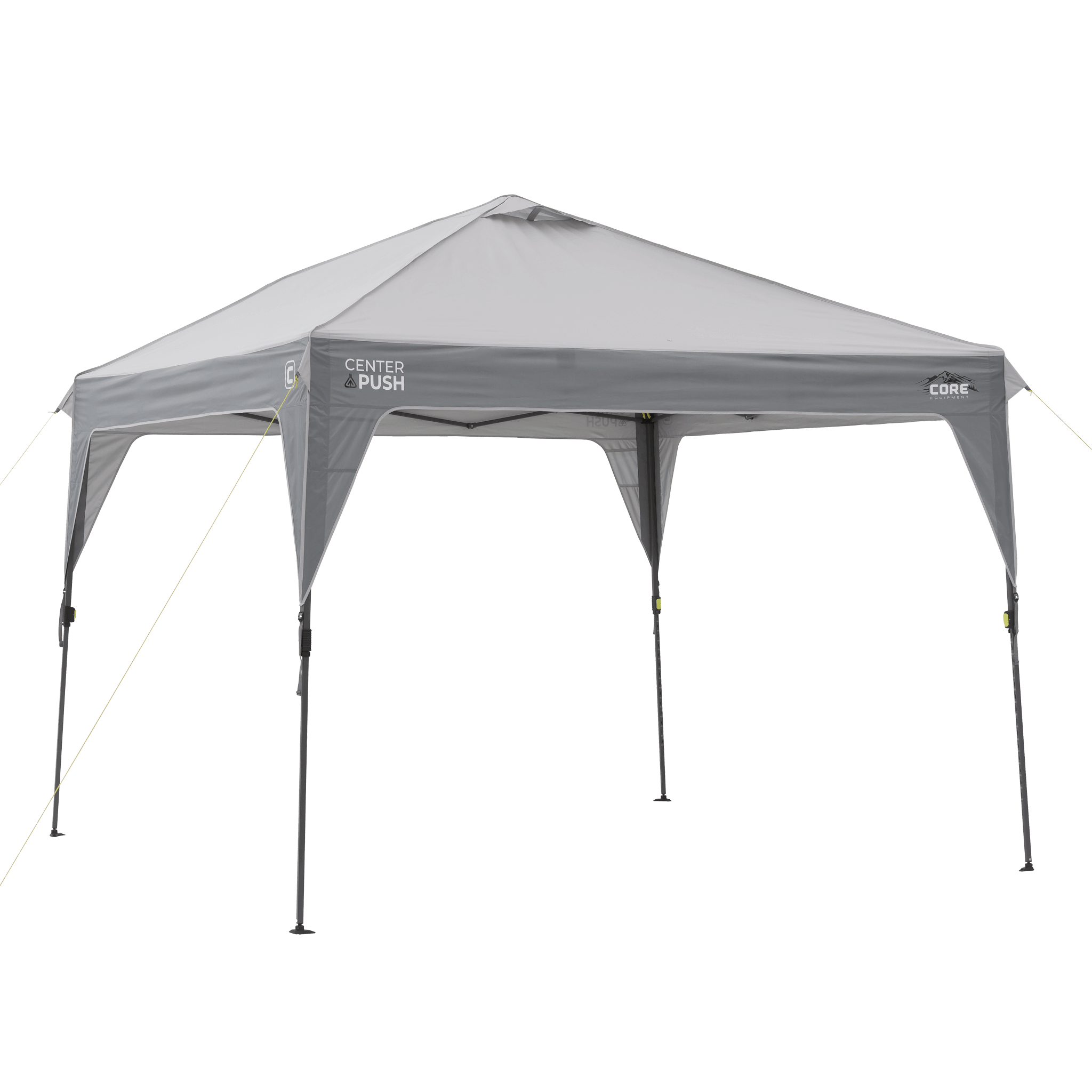

Instant canopies are designed to be set up quickly and easily, but cold, windy conditions create extra challenges. Wind strains an unsecured canopy top, and cold temperatures can affect your canopy joints. The good news is that a few simple setup changes can help improve stability and give you more confidence when the weather isn't cooperating.
How Wind and Cold Change Your Setup
Setting up a center-push canopy is easy: first, extend the frame, then raise the top, and lock the legs. When the wind picks up, the same steps take a little more care.
- Wind creates uplift. Canopies are flat, broad surfaces. Even moderate gusts can generate enough lift to pull stakes from soft ground or tip an unweighted frame.
- Cold stiffens materials. Metal joints and fabric become less flexible in lower temperatures. Forcing a cold frame open too fast risks bending a joint or cracking a connector.
- Frozen or hard ground resists stakes. Standard stakes don't penetrate frozen soil easily, which limits your anchoring options.
Understanding these factors helps you plan before you arrive at the site, not after things start going sideways.
How to Anchor a Canopy in Windy Weather
Anchoring is the single most important step when wind is a factor. A canopy without proper anchoring is a liability, regardless of brand or build quality.
On Grass or Soft Ground
- Drive stakes at a 45-degree angle away from the canopy, pulling against the direction of lift.
- Use longer stakes (10 to 12 inches) instead of the standard short stakes for better hold.
- Attach guylines from each corner to staked anchor points for added resistance. The 10' x 10' Center Push Instant Canopy includes integrated guylines and ground stakes for exactly this purpose.
On Hard Surfaces Like Concrete or Asphalt
- Stakes won't work here. Use weighted anchors at each leg instead.
- Sandbags (25 to 40 lbs per leg) or dedicated canopy weights are simple, reliable options
- Distribute weight evenly across all four legs. One bag in the center of the canopy floor does almost nothing to prevent corner lift.
Take Extra Care when Anchoring
When wind is in the forecast, anchoring it securely becomes more important than ever. Before you settle in, make sure your canopy is properly staked down, including the canopy top’s guylines (use canopy weights on hard surfaces). A little extra attention during setup helps keep your shelter stable and gives you peace of mind throughout the day during cooler months.
Adjusting Your Setup Process for Cold Weather
Cold weather doesn't mean you can't use a pop-up canopy, but the setup needs a few modifications.
Let The Frame Warm Up Before Extending
If your canopy has been stored in a cold car or garage, it might be stiff at first. Don’t force it open. Carefully open it, either working it open slowly or using a lubricant like WD40. Pushing cold metal too hard can damage the canopy’s locking mechanisms.
Lower The Canopy Height
In windy or cold conditions, keeping the canopy at a short setting reduces its wind profile and provides a more stable structure. CORE canopies like the 13' x 13' Instant Canopy offer three height settings, so you can drop the frame closer to the ground as needed on breezy days.
Add A Sun Wall For Wind Blocking
A Sun Wall Accessory on the windward side creates a barrier that reduces gusts inside the covered area. The wall also adds a layer of shelter in cold weather, keeping the space underneath more comfortable.
Secure The Canopy Before Adding Walls Or Banners
Walls increase wind load. Always anchor the bare frame first, then attach accessories once the structure is stable.
When to Take Your Canopy Down
Knowing when to pack up matters just as much as knowing how to set up. A canopy is built for shade and shelter in moderate conditions, not for riding out storms.
- Watch the forecast. Sustained winds above 20 to 25 mph put significant stress on any pop-up canopy frame. Gusts well above that can overpower even good anchoring.
- Set a wind limit before you arrive. Decide in advance what your threshold is. If you hit it, take the canopy down. A controlled takedown beats a damaged frame.
- Monitor throughout the day. Wind conditions can change quickly, especially in open fields and parking lots. Recheck stakes, guylines, and weights regularly.
Stay Covered When Conditions Get Tough
A little extra planning is all it takes to use canopies confidently in wind and cold. Anchor every leg, lower the frame, block the wind where you can, and know your limits. Browse the full lineup of canopies from CORE and pick the setup that keeps your crew covered, no matter what the forecast says.
Frequently Asked Questions
How Do I Set Up a Canopy in Windy Weather?
Stake every leg at an angle, attach guylines, lower the height setting, and add weight to each corner. Anchor the frame before attaching any walls or accessories.
Can You Use a Pop-Up Canopy in Winter?
Yes. Cold weather requires a slower setup to protect joints, and extra anchoring since frozen ground holds stakes less effectively. Add a sun wall for wind protection.
How to Anchor a Canopy Tent in Cold Weather?
On frozen ground, use weighted bags or plates instead of stakes. On softer winter ground, use longer stakes driven at a 45-degree angle with guylines attached.
How Much Weight Do I Need per Canopy Leg?
Aim for 25 to 40 lbs per leg on hard surfaces. Heavier weights offer more stability in gusty conditions. Distribute weight evenly across all corners.
Should I Lower My Canopy in High Winds?
Yes. Lowering the frame reduces the surface area exposed to wind, which decreases uplift and stress on the structure. Most CORE canopies offer multiple height settings.
Are CORE Canopies Designed for Rain?
CORE canopies provide shade and wind shelter with UPF 50+ rated fabric and vented roofs. Standard canopy models are not designed for use in rain.
What Size Canopy Works Best for Windy Conditions?
A 10x10 canopy is easier to anchor and manage than larger models in wind. Smaller footprints catch less wind and require less weight to stay secure.


