



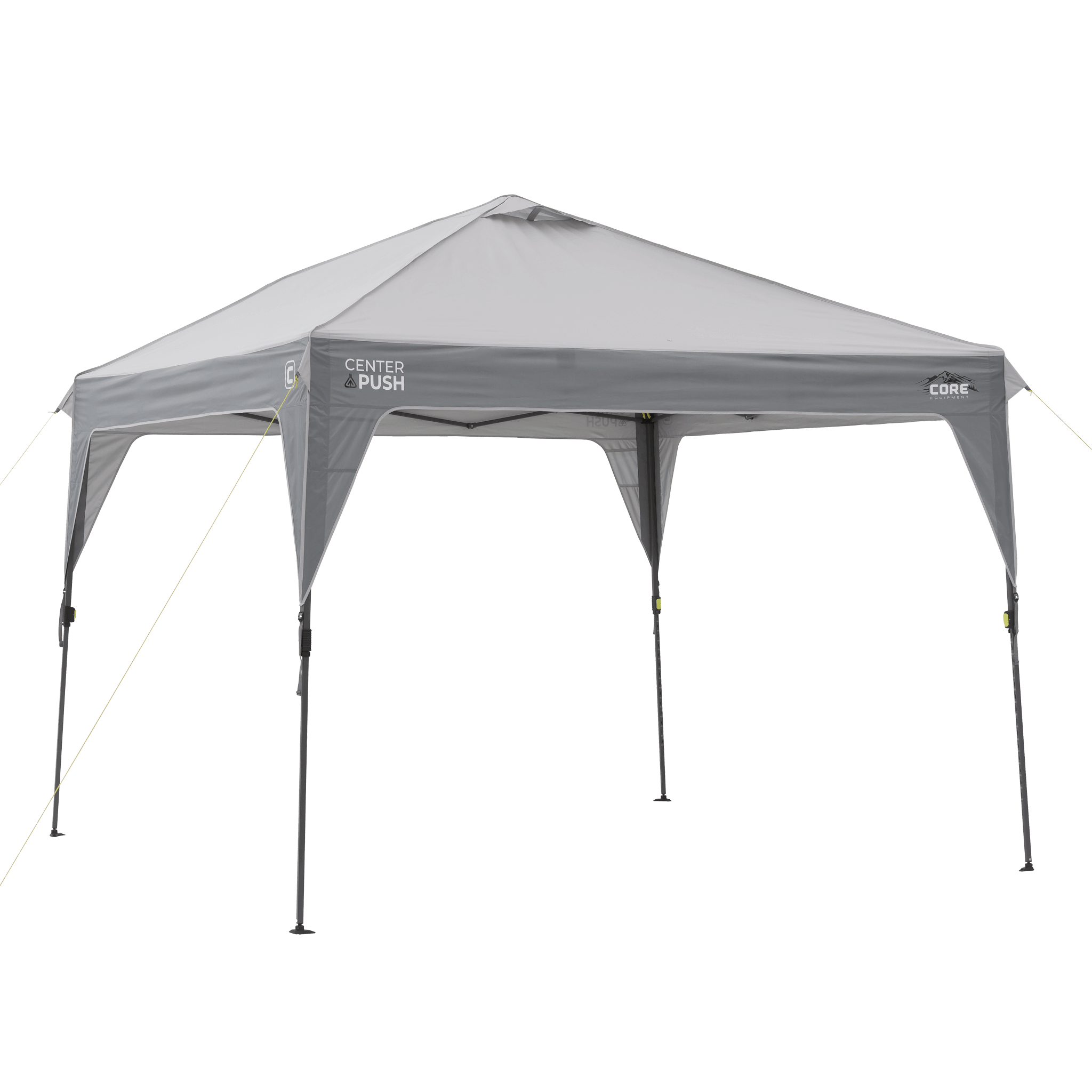

Most campers don't think much about tent stability until the wind starts picking up. A tent's ability to stay secure in gusty conditions depends on more than just stakes and guylines. The way the frame is designed, how the poles connect, and how the structure distributes force all play an important role.
Here's a closer look at the design features that help tents remain stable when the wind starts picking up..
How Traditional and Instant Frames Differ
- Traditional tents use separate pole segments joined by shock cord. You thread or clip them into the tent body and stake them to the ground for stability. Dome tents commonly use this design, since the crossed-pole pattern creates a naturally wind-resistant arch.
- Instant tent frames pre-attach the entire pole structure to the tent body at the factory. Unfold, extend each leg, and lock into place. CORE's Instant Hub Technology uses steel poles with locking buttons and a durable polymer hub, bringing setup down to about 60 seconds for a six-person model and roughly two minutes for larger sizes.
Both designs rely on the same physics: poles distribute tension across the fabric, and stakes plus guylines transfer wind loads into the ground.
Wind Stability: What Really Matters
Frame type matters, but it's one piece of a larger system. Here's what determines how well any tent holds up in wind.
| Factor | What Changes |
|---|---|
| Pole material | Steel poles flex less than fiberglass under sustained wind loads |
| Hub connection | Pre-attached hubs eliminate weak hand-assembled connections |
| Tent shape | Lower-profile dome shapes shed wind. Taller cabin walls catch more wind and require thoughtful engineering to stay strong. |
| Staking | Staking out the tent ensures stability |
| Rainfly fit | A taut, fully staked-out rainfly prevents stress on the tent frame |
So, is a traditional tent more stable in wind than an instant tent? Not necessarily. Nowadays, a well-designed and fully staked instant tent can match or outperform a traditional tent. CORE instant cabin tents are rated for winds up to 35 mph when fully staked and guyed out, perfect for most three-season camping conditions.
Staking and Guylines Make the Real Difference
A strong frame means nothing without proper anchoring. Both styles benefit from the same staking approach.
- Stake every corner. Even on calm nights, corner stakes prevent the tent from shifting.
- Use all guylines. Attach every one and pull them taut at a 45-degree angle from the tent wall.
- Angle stakes into the wind. Drive them at a 45-degree lean away from the direction of pull.
- Stake the rainfly separately. A loose rainfly catches wind like a sail. Staking the fly tight absorbs gusts before they reach the poles.
CORE tents ship with attached guylines on the rainfly and steel stakes in the carry bag. The 12 Person Instant Cabin Tent with Full Rainfly adds a vestibule that buffers wind between the outer shell and the tent body.
Choosing the Best Frame for Your Conditions
Matching the right frame to your camping conditions keeps you comfortable in wind without overbuying.
- Casual car camping in mild weather: An instant tent with pre-attached steel poles keeps setup fast and performance reliable. CORE's cabin tents offer standing height, room dividers, and straight-wall designs for maximum interior space.
- Windier campsites or exposed ridges: A lower-profile dome tent naturally sheds wind better than a tall cabin shape. CORE's dome tents pair that aerodynamic profile with fiberglass pole flex that absorbs gusts.
- Rainy conditions with sustained wind: For the best tent for rain with sustained wind, H2O Block™ Technology includes 1200mm water-resistant fabric, multi-layer seam protection, guylines, and fully zippered windows. The full rainfly collection adds a vestibule and extended coverage to keep water away from the base.
Pick the Frame That Fits Your Camping Style
The right tent frame depends on where you camp, how much wind you expect, and how fast you want to be set up. A well-staked tent with the right pole material and a taut rainfly handles breezy conditions regardless of frame style. Browse the full tent collection from CORE and match your next shelter to the conditions you'll actually face.
Frequently Asked Questions
Is a Hub Tent More Stable in Wind Than an Instant Tent?
Not necessarily. Stability depends on pole material, staking, and guyline use. A properly staked instant tent with steel poles performs well in winds up to 35 mph.
Which Tent Frame Holds Up Best in Storms?
Any frame staked correctly with taut guylines handles stormy conditions. Lower-profile dome shapes shed wind naturally, while cabin shapes offer more interior room.
Do Hub Tents Need More Stakes Than Instant Tents?
No. Both styles use similar staking points. Corner stakes plus fully guyed rainfly lines give either frame type its best wind resistance.
Are Steel Poles Better Than Fiberglass for Wind?
Steel poles flex less and handle sustained loads well. Fiberglass poles absorb gusts through flex, which suits lower-profile dome designs. Both work for three-season camping.
Can an Instant Tent Withstand Strong Wind?
CORE instant tents are rated for winds up to 35 mph when fully staked and guyed. Proper anchoring and a taut rainfly are the keys to hitting that rating.
What Is the Best Tent Shape for Windy Campsites?
Dome tents have a natural aerodynamic advantage. Cabin tents offer more space but catch more wind. For exposed sites, orient the narrowest side toward the prevailing wind.
How Do Guylines Help a Tent in Wind?
Guy lines transfer wind force from the tent fabric and poles into the ground through stakes. Pulling them taut at 45-degree angles prevents the rainfly from flapping and stressing the frame.


